Understanding injuries in Children: Why kids aren't just 'mini adults'
When a child gets hurt, it is natural to assume their body heals and responds just like an adult’s – only on a smaller scale. However, children are still developing. Their bones, muscles, tendons, joint cartilage, and nervous systems are constantly growing and adapting. Because of this, young people experience injuries, imaging results, and recovery entirely differently from adults.
Why Children Get Different Injuries to Adults
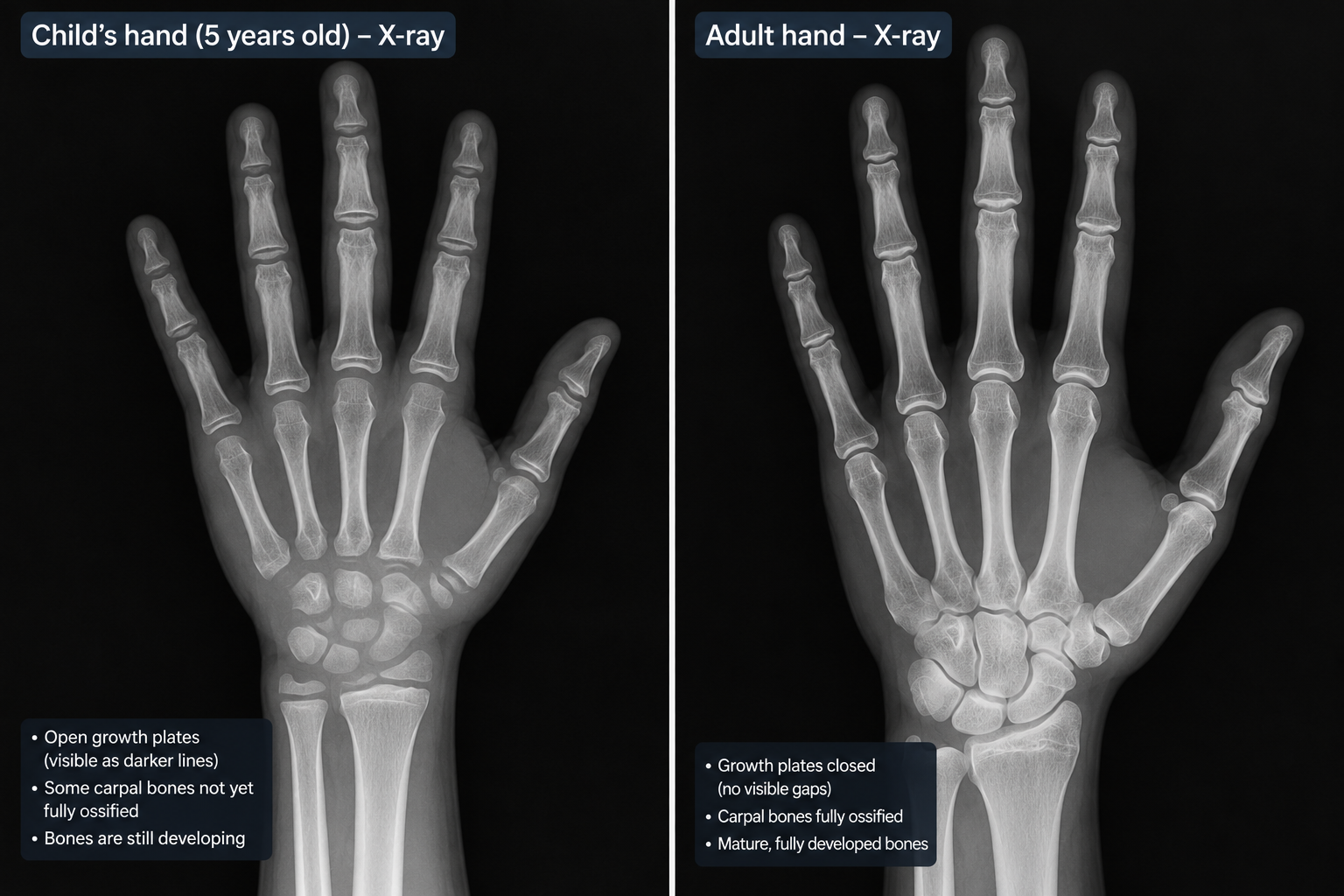
An adult skeleton is fully formed, but a child’s body is a work in progress. This creates unique “weak links” when an injury occurs:
- Growth Plates (Physes): Near the ends of growing bones are soft areas of developing cartilage called growth plates. These are weaker than mature bone. A twist or force that might tear a ligament in an adult often causes a growth-plate fracture in a child instead.
- Bendier Bones: Children’s bones are more flexible and wrapped in a thick protective layer. Rather than snapping cleanly like adult bone, a child’s bone might bend, buckle, or crack on just one side (known as a greenstick fracture).
- Growing Pains and Stress: Muscles and tendons often grow faster than the bones they attach to. This temporary mismatch puts extra tension on growth sites, leading to common conditions like Osgood-Schlatter or Sever’s disease.
- Long-Term Risks: Because bones are still developing, an untreated or severe injury to a growth plate can affect future growth, occasionally causing a bone to grow at an angle or shorter than it should.
Why a "Clear" X-Ray Doesn't Always Mean Everything Is Okay
Parents are often confused when a doctor says an X-ray looks clear, yet their child remains in pain or refuses to put weight on a limb. Here is why X-rays do not always tell the full story for a child:
- Cartilage Is Invisible on X-Rays: Much of a young child’s skeleton is still made of cartilage, which does not show up clearly on standard X-rays. Significant injuries passing through cartilage -especially around complex joints like the elbow – can easily be missed.
- Normal Development Can Look Unusual: Growing bones have changing gaps, extra growth centres, and uneven edges that can easily be mistaken for a fracture – or hide a real one.
- The Bottom Line: A child’s X-ray must be interpreted against their specific stage of growth, not an adult template. If persistent pain, swelling, or limited movement continues despite a “clear” X-ray, further investigation (such as an MRI or repeat scan) may be needed.
Why Children’s Physiotherapy Is Different from Adult Rehab
In adults, rehabilitation usually focuses on rebuilding lost muscle, restoring movement, and getting back to work or sport. For children, physiotherapy requires a very different approach:
- Protecting Growth: Exercises must be carefully selected so they do not overstress sensitive growth plates or developing joints.
- A “Whole-Child” Approach: Therapists must account for motor development, school life, play, and family support, making sessions engaging, age-appropriate, and enjoyable.
- Long-Term Protection: Treatment is not just about short-term pain relief, but about protecting the skeleton as it continues to mature.
Why "No Pain" Doesn't Mean Things Are Fully Healed
One of the trickiest parts of pediatric recovery is that children bounce back quickly. A young person will often stop complaining of pain and start running around long before the underlying bone or cartilage has fully repaired.
Because growing tissues remain vulnerable, being pain-free does not mean tissue healing is complete. Returning to high-impact sports too soon increases the risk of re-injury or long-term growth complications. Guided recovery ensures the joint or bone is structurally ready for full activity, not just feeling better on the surface.
Ensuring the Right Care for Your Child
Every parent simply wants what is best for their child when an injury happens. Because young bodies heal differently, having a therapist who genuinely understands pediatric growth patterns, skeletal maturity, and safe return-to-play protocols makes all the difference to a child’s long-term health.
At ESIC, our physiotherapists have completed specialised training in children’s and young people’s injuries and their return to fitness. Our goal is simply to ensure every young person receives the tailored, expert care they need to grow, heal, and stay active safely.
NOTE: In Scotland, anyone working in roles that involve care, supervision, or guidance of individuals under 18 is considered to be carrying out a regulated role and must meet strict safeguarding requirements. This includes physiotherapists. That’s why we are proud to operate with full Disclosure Scotland accreditation, with all of our therapists who work with vulnerable groups approved through the Protecting Vulnerable Groups (PVG) scheme.
Kids Back 2 Sport Accredited Clinic
As a Kids Back 2 Sport-accredited clinic, our physiotherapists have specialist training in paediatric musculoskeletal rehabilitation, supporting children aged 8 and over to recover safely, build strength and confidence, and return to the activities they love. Whether your child has sustained a sports injury, experienced a playground accident or is struggling with discomfort associated with a growth spurt, we provide individualised, age-appropriate and evidence-based physiotherapy.
Resources for Young Athletes, Parents and Coaches
The Kids Back 2 Sport resource library explains common sports injuries in children and youth athletes, helping parents, teachers and coaches understand why they occur during growth and sport.
Why not meet read some real life patient stories in our patient reviews to help you learn more about Edinburgh Sports Injury Clinic.